


Check-In Check-Out Intervention: A Practical Way to Address Setting Events at School
Looking Beyond the Behavior
It was early on a Thursday morning when my radio went off asking for support in a classroom. My team and I couldn’t immediately pinpoint what was going on. Some mornings, the student arrived regulated and ready to learn; other mornings, like that one, felt tough from the moment they walked through the door. Later that day, as we reflected together, we began noticing patterns between the “good” days and the harder ones. One of my paraprofessionals pointed out that the mornings we were called to the classroom early often followed days when the student arrived late to school.
The next morning, the radio went off again. This time, when I arrived, I started by simply asking the student how their morning had gone. With a little time they told me that their sibling had been struggling to get ready in the morning causing them to be late to school. They were arriving flustered, upset about their impending tardy, and worried about the morning work they might have missed. It was all making sense now. Arriving late was what we call a setting event.
How Setting Events Shape Student Responses
A setting event is a variable that increases the likelihood a behavior will occur. Unlike antecedents, which happen immediately before a behavior, setting events occur earlier and change how sensitive a person is to later triggers. They sit in the background, quietly shaping how someone responds. Hunger is a common example. If I skip breakfast, I may feel fine at first, but as the morning wears on, my hunger grows and my patience thins. Later, my computer crashes and I lose an important report. I would likely be frustrated regardless, but hunger amplifies my reaction and sends me into a tailspin.
We see this with students all the time. A disagreement with a sibling before school, a poor night’s sleep, or not feeling well can all act as setting events. These factors may not directly trigger behavior, but their lingering effects make it more likely a student will struggle when a trigger does occur.
Identifying a student’s setting events and having a consistent way to check for them can be incredibly powerful. When teams know what a student is carrying into the day, they can either mitigate those factors or proactively increase support. One effective way to do this is through the Check-in and Check-out intervention. Let’s explore the steps of Check-in and Check-out more.
Check-In Check-Out Intervention
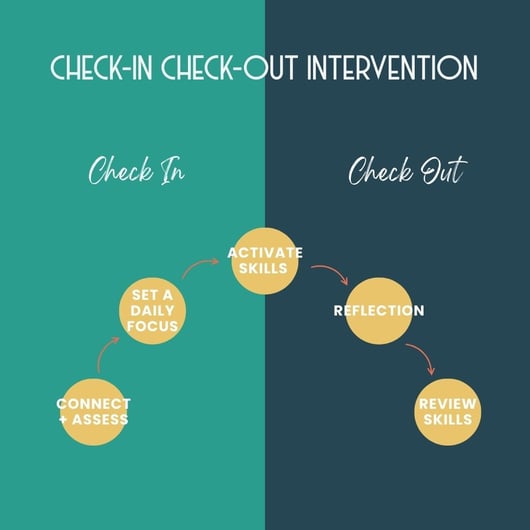
Connect and Assess
Check-in should always begin with connection. A positive greeting paired with a quick assessment of mood and potential setting events sets the tone for the day. This might include questions like, “How are you feeling this morning?” or “Did you get breakfast today?” For students who struggle to answer verbally, visual choices can provide an accessible way to communicate needs.
Set A Daily Focus
The next step of Check-in is to identify a short-term, actionable focus the student can work towards for the day. This might sound like, “I will use my break strategy during science.” A clear daily focus helps the student know what to work toward and helps staff recognize when and where support may be needed.
Activate Skills
The final step of Check-in is to provide a brief opportunity for the student to practice the skills or strategies they might use to help meet their daily focus. Modeling, role-playing, or quick reminders help bring these strategies to the forefront, increasing the likelihood that the student will use them later in the day.
Check-out
Check-out is the second part of this intervention and typically takes place at the end of the day. Like Check-in, Check-out involves 3 steps, with the first being the opportunity to connect and assess, similar to what was done during Check-in. The other steps of Check-out include:
Reflection
As the name implies, this step of Check-out is an opportunity for the staff and student to reflect on the successes and challenges of the day, including asking the student to think back on their use of taught skills and strategies. Staff can use guiding questions to help the student identify their actions and choices from the day.
Review Skills
The final step of Check-out is to review skills. This includes time to revisit the daily focus set during Check-in. We may ask the student if they were able to accomplish their focus for the day, and if they didn’t, what might have been a barrier. This is a great opportunity to note potential focuses for the next day or the future.
Meaningful Difference in Students
When implemented consistently, Check-in and Check-out are highly effective interventions. It is important to intentionally build Check-in and Check-out into staff members’ morning and afternoon duties. Reflecting this time on a staff schedule commits the team to delivering the intervention daily.
Check-in/Check-out is a robust intervention that, when done consistently, builds rapport between students and staff and increases the likelihood of identifying and addressing setting events early in the day. For my student, we started implementing both Check-in and Check-out daily and saw benefits quickly. We could get in front of behavior each morning with a Check-in to connect and assess, then engage in reflection about their day during Check-out. If this scenario reminds you of a student you support, I encourage you to schedule a little time to complete the steps of this powerful intervention. Those few minutes of connection and preparation can make a meaningful difference in a student’s ability to manage their day.
Resources to Strengthen Your Implementation
Check out our course: Check-in/Check-out Course to dive deeper into this intervention system.
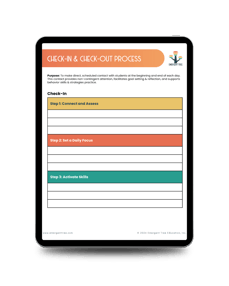
Our Check-in & Check-out Process tool is designed to help you get started with this intervention process. Check it out to get started!

Comments