

Give Behavior A Hand: 5 Ways to Teach, Not Just Tell
I spent my first several years teaching in a large, bustling high school. More specifically, in a classroom that opened directly onto one of the busiest intersections on the freshman hall. Every passing period brought a surge of students, noise, and energy right to my doorway. Every passing period sounded the same:
“Stop running!”
“Put your ID on!”
“Get to class!”
Those statements weren’t necessarily wrong. The students did need redirection. But none of those phrases were instructions, they were reactions. My colleagues and I were responding to the chaos in front of us, and for many students, being told how to behave is very different from being taught what the expectation looks like, sounds like, and feels like.
The truth is, behavior expectations are lessons, often a series of lessons, just like anything we teach in our academic curriculum. And if we want students to meet those expectations consistently across classrooms, content areas, and grade levels, we have to teach them with the same intention and clarity we bring to academics.
In MTSS-Behavior frameworks, strong systems depend on adults aligning around this single idea: Students rise to expectations that are taught, not ones that are simply announced.
When all we do is tell students what to do, we’re counting on their past experience to carry them through. We assume they’ve learned the skill already, know how to use it in a different situation, can remember it when things get busy, and are regulated enough to actually do it.
For a lot of students, especially those who find transitions, language processing, or self-management challenging, these expectations feel brand new. And even if the words sound familiar, they may never have received the modeling, practice, and feedback required to make the routines stick.
Effective behavior instruction includes:
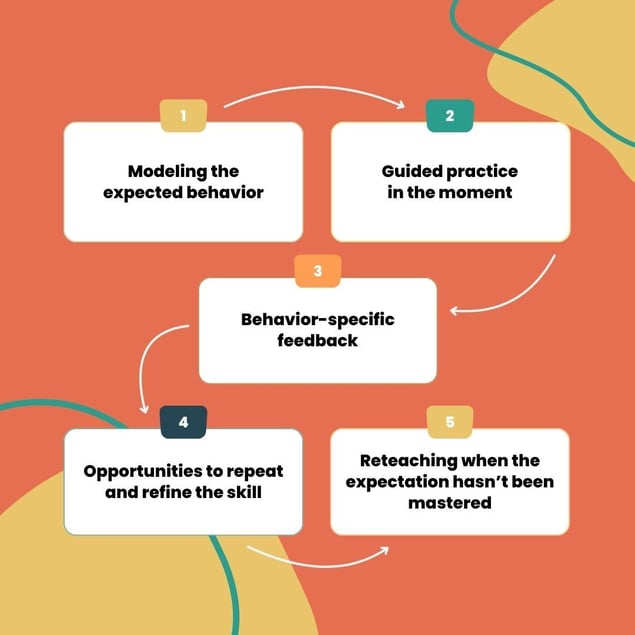
These elements are the backbone of teaching behavior expectations. Without them, students receive mixed messages, adults rely on repeated (and often loud) verbal directives, and classrooms experience inconsistent follow-through.
If you are wondering how to shift from telling to teaching, let me “give you a hand” with 5 concrete ways that could help you.
1. Break the expectation into observable actions
“Be respectful” means 50 different things to 50 different people. So instead of a vague expectation, break it down into clear, teachable actions. If you can see it and hear it, you can teach it—and reinforce it.
2. Model the behavior.
Students need to see the expectation in action. Modeling takes 15–30 seconds and can dramatically reduce repeated redirections later.
3. Practice it together.
This is where teaching becomes “sticky.” Invite students to rehearse routines and behaviors the same way you’d practice math facts or reading fluency. Practice is not punishment—it’s instruction.
4. Give behavior-specific feedback
Replace general praise with precise reinforcement. “Thank you for keeping your hands to yourself—that helped our group work stay safe.” Specific feedback builds skill, motivation, and internal clarity.
5. Reteach when needed
When a student has difficulty meeting an expectation, think of it as information, not misbehavior. Reteaching is a natural part of MTSS and mirrors what we do in academics every day. The more proactively we reteach, the more quickly we see students develop consistency and confidence.
So what does this look like in your classroom?
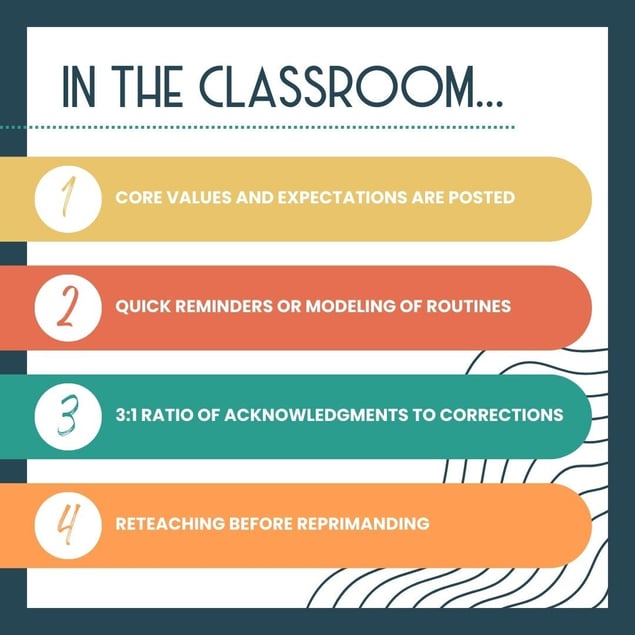
Even now, there are moments when I walk the halls of a campus, I remember back to my first school, standing at my door in the hallway with my teacher colleagues yelling at students all the things they were doing wrong. At some point, we decided one day to just tell all the students that were walking and getting to class how much we appreciated them doing so. When we changed our approach, our little corner of the school began to be much calmer and happier between classes.
You don’t need to invest a lot of money, spend hours planning, or purchase a specialized curriculum to teach behavior well. What truly makes the difference are a few intentional moments: clarifying expectations, modeling what success looks like, practicing alongside students, and providing meaningful feedback. Those small, consistent actions build the foundation for lasting behavior change.
So let me give you a hand in being intentional about teaching a behavior skill. Choose one strategy from above and approach it the same way you would an academic routine. Model it clearly, practice it alongside your students, and offer feedback that helps the learning take root. You have the power to shape how students understand and navigate their world, one taught expectation at a time.
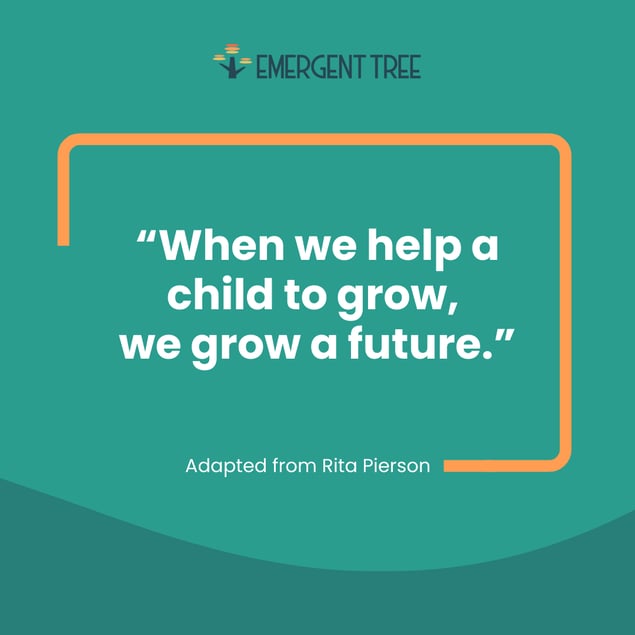
"When we help a child to grow, we grow a future." (adapted from Rita Pierson). And the same holds true for behavior - students rise when someone takes the time to teach them. At the end of the day…behavior isn’t told; it’s taught.
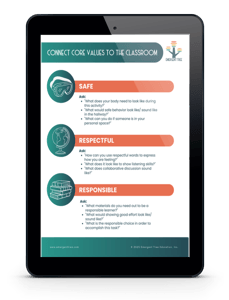
Want a quick cheat sheet to follow through this process?
Download our Connect Core Values to the Classroom List.
Looking for some additional resources for your journey?
- Check out our course Skill Building in Tier 1 Systems: Aligning Behavior Instruction to learn more about the importance of skill building for school behavior, how to use a behavior teaching plan, and the Frayer model.

Comments